What Should I Do With Unused or Expired Prescription Medications?
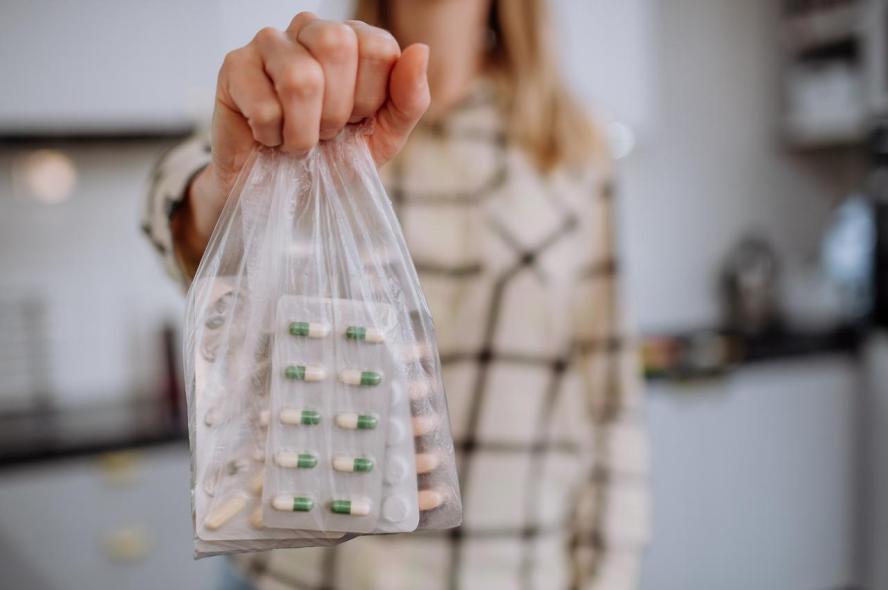
If you have unused or expired medication, the best thing is to dispose of it. Many people hang on to them, and this just creates opportunity for things to go wrong.
A justified common concern with medications in the home is children, especially toddlers, who get into things they shouldn’t. If a drug is just laying around, a young child may put it in their mouth. This is a big reason kids end up in the emergency department with drug exposure. Keeping medications in childproof containers and keeping them out of reach is the best approach.
There are a lot of options for medication disposal, and I encourage people to use whichever is easiest for them.
One option is to bring medications somewhere that is experienced in drug disposal, such as your local pharmacy, which may offer prepaid drug mail-back envelopes.
Another option is your local police department or fire station. In my town north of Boston, I can drop off unused medications to the police department lobby 24 hours a day, no questions asked, no ID needed. You can use the DEA’s search utility to find similar year-round drop-off locations near you.
On a national level, the DEA sponsors Take Back Days on a regular basis, typically with one in October and one in April. Many locations such as local law enforcement agencies, pharmacies, and hospitals participate in these events and may run additional take back days, as well.
The FDA suggests putting medications in the trash if you can’t bring them to a take-back location, but it’s important to make them inaccessible when doing so. You can mix medications into something unpalatable, like coffee grinds or kitty litter, and place them in a sealed container before tossing. Or, if it's a liquid solution, put it in something absorbent, and then throw that in the trash.
Additionally, people are often inclined to flush unused medications down the toilet, which is an option for some medications. The FDA publishes a “flush list” of drugs they endorse flushing if that is the fastest way to get them out of circulation.
Included on the list are a select number of drugs that could produce dangerous effects with just one dose, or even a partial dose. It primarily consists of opioids and some stimulants. Exposure to just a little bit of fentanyl—even a used fentanyl patch—could seriously harm, if not fatally injure, someone.
There are a few other special cases of medication disposal worth thinking about.
Police stations and fire departments generally prefer to collect medications that are solid in form, rather than liquids or sprays. For this reason, inhalers are a better candidate for a Take Back Day.
Also, disposal of a medication and the syringe or other sharps you may use to administer it should be handled separately. In my town, the police department takes unwanted drugs, but the fire department takes the sharps.
You can get a sharps container at a pharmacy or local health department or use something like a laundry detergent bottle made of thick plastic with a tightly fitting lid. Sharps can then be disposed of at a fire department or other collection location.
Knowing how to dispose of medications is important—but so is knowing when to do it.
Some medications have an especially short shelf life. A common one is nitroglycerin, which is often given for symptoms of angina. Typically, we tell people to keep it in its original container and to get rid of it within six months of opening the bottle, whether the expiration date has come or not, because it begins to degrade soon after the bottle is opened for the first time.
Another example, although not quite as extreme, is aspirin. When you open a bottle of aspirin, you may notice it has a sweet or acidic smell to it. That smell is the drug beginning to degrade through oxidation.
A majority of the time, the worst-case scenario with a drug past its expiration date is that it may have lost a degree of potency, but there's no further risk of side effects if ingested. If you’re taking aspirin for pain management, decreased potency might not be a big deal. However, if it’s for anti-platelet purposes—to prevent a heart attack or stroke—you want to make sure your medication is current.
Another example is antibiotics. You should always complete the full course of antibiotics you’re prescribed, but people often don’t and keep the remainder around. If the drug has lost potency and is consumed at a later date, the incomplete prescription might not clear all of the infection and could create a breeding ground for antibiotic resistance. This is harmful not just for the individual user, but for the whole community: others might now be exposed to a resistant organism because of subtherapeutic antibiotic use.
Generally speaking, you should discard medication if it's no longer being used, if it’s reached the expiration date on the package, or if it's been one year since the date that you received it. And if you’re still using it after one year, it ought to be renewed.
Paul Abourjaily is an associate professor of medicine at Tufts University School of Medicine and clinical pharmacologist at Tufts Medical Center.
Department:
Medicine