Stopping Nipah Before It Spreads
by Genevieve Rajewski
In a world still feeling the aftershocks of the COVID-19 pandemic, news of a potential new viral threat can quickly raise alarm. That was the case following reports in India of a recent outbreak of Nipah virus, which causes an often-fatal disease with no approved vaccines or treatments.
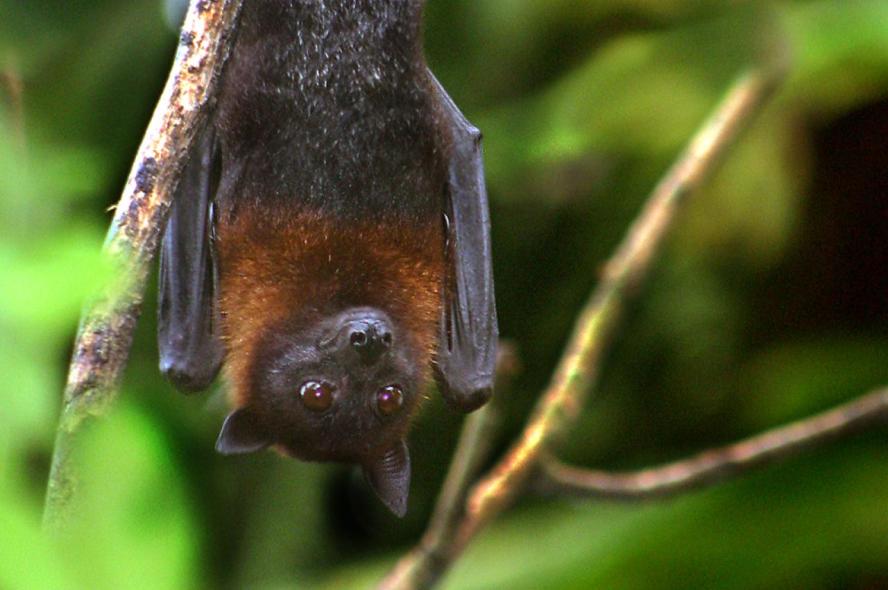
Nipah virus is carried by fruit bats (Pteropus species), which do not become ill but can pass the virus to people or livestock through contaminated food or close contact. Once humans are infected, the virus can spread from person to person, usually through direct contact with bodily fluids while caring for someone who is seriously sick. In people, Nipah most often causes severe brain swelling, known as encephalitis, and sometimes respiratory illness.
Although health officials report that the outbreak appears contained, several Asian countries—including Indonesia, Malaysia, Nepal, Pakistan, Singapore, Thailand, and Vietnam—and Hong Kong have increased airport screening as a precaution.
To help explain what’s known about this outbreak and what it means for global health, Felicia Nutter, D.V.M., Ph.D., DACZM, V93, an associate professor of infectious disease and global health at Cummings School of Veterinary Medicine at Tufts University, and Jonathon Gass, Ph.D., VG22, an assistant professor of public health and community medicine at Tufts University School of Medicine, shared their insights.
Nutter and Gass both have worked extensively with and in high-risk countries to study and help address the risks posed by Nipah and other dangerous viruses such as avian influenza, coronaviruses, and Ebola viruses before outbreaks occur.
How is Nipah virus similar to others that spill over from animals to people, such as those that cause COVID-19 and avian influenza?
Felicia Nutter: Zoonotic viruses with pandemic potential share a key trait: they can move between animals and people and then spread between people. Human behavior and everyday choices can either make it easier—or harder—for these viruses to move between species and through human communities.
These viruses that move between animals and humans are especially concerning because people usually have little natural immunity to them when they first appear. Many of these viruses also mutate quickly, which can help them adapt to new hosts. At the same time, they may circulate widely in wildlife that are hard to monitor. As human activity increasingly brings people, livestock, and wildlife into closer contact, it creates more opportunities for such viruses to cross into humans and, potentially, to spread.
Do we know what caused the latest outbreak in India?
Jonathon Gass: As of this interview, the cause of the latest outbreak is not yet known. There have been two cases, reportedly involving health care workers, in India’s West Bengal state confirmed in early 2026, but all identified contacts so far have tested negative for the disease.
Nutter: In most documented Nipah outbreaks, the virus first reaches people through contaminated food—most often fresh date-palm sap. To collect the sap, harvesters shave the bark of date-palm trees so the liquid can drip into a pot overnight. Fruit bats are attracted to the sweet sap and may lick the flowing sap or drink from the collection pots. As they feed, bats can leave behind saliva or urine carrying the virus, which can infect people who later drink the raw sap or products made from it.
Is there anything especially concerning about this outbreak?
Gass: Because the source of these infections is unclear, there is concern that the disease could spread beyond the reach of existing public health controls. However, recent data tells us that uncontrolled spread of this virus is unlikely.
Nipah virus is considered a priority pathogen because there are no licensed vaccines or treatments, and it is highly fatal, historically killing up to 70% of diagnosed patients. Though rare, Nipah virus infections also sometimes may have no symptoms, which adds to concerns about this disease’s pandemic potential. And we lack consistent field and laboratory surveillance to track how quickly the virus is changing, which could increase how easily it spreads from person to person.
Is there a risk of Nipah traveling outside India?
Gass: The World Health Organization announced that the risk of wider spread is low, with no evidence of sustained human-to-human transmission and no sign that the virus has moved beyond the initial cluster in West Bengal. Small, localized outbreaks (which do happen from time to time and sometimes are forecasted) generally do not spread beyond national borders, particularly because these transmission events tend to occur in rural areas, so the risk to the global population is low. Still, surveillance systems must remain on high alert to prevent rare spread beyond the initial outbreak area.
What has gone right with the response to this outbreak?
Gass: Indian authorities reported that 196 contacts were traced, monitored, and tested. None developed symptoms or tested positive, which is a strong indication of effective public health containment. Local clinicians and public health teams acted quickly; at least one major hospital demonstrated rapid testing, isolation, and containment measures that likely helped prevent broader transmission.
For global health security, nearby countries, including Thailand and Nepal, have stepped up health screenings and surveillance. Although largely precautionary, this proactive regional collaboration supports early detection and preparedness, which are key to effective outbreak response across borders.
What are our biggest unanswered questions about Nipah virus?
Gass: We know fruit bats are the natural hosts that allow Nipah virus to persist in the environment, but we don’t fully understand why the virus spills over into human and other animal populations some years and not others. Researchers need to better understand whether factors like temperature, rainfall, food shortages, or habitat disruption affect how much virus bats shed.
Researchers are also studying why some outbreaks involve “superspreading” events while others do not, as well as if patients with no symptoms or mild infections sometimes enable the virus to spread more rapidly or broadly.
What factors potentially increase the risk of a future Nipah epidemic?
Gass: The risk of future Nipah outbreaks rises when people and domestic animals have closer and more frequent contact with wildlife. Activities such as deforestation, expanding agriculture, and keeping livestock near bat habitats can make it easier for the virus to spread from animals to people. Preventing future epidemics depends on changing how humans and animals share space, not eliminating wildlife, including fruit-eating bats.
Nutter: When an outbreak occurs, the focus understandably shifts to rapid response: identifying cases, stopping transmission, and preventing deaths. But many of the changes needed to sustainably reduce risk unfold much more slowly and lie outside the human health sector alone. It is a complex, nuanced problem that requires addressing human livelihoods, land use, food systems, and economic pressures that make risky contacts with wildlife difficult to avoid.
How can we best strengthen our defenses?
Gass: The greatest impact comes from prevention efforts at the community level. This includes monitoring for early warning signs in high-risk areas, supporting farming practices that reduce exposure to potentially infected animals, expanding access to rapid testing, protecting health care workers from infection, and improving coordination between neighboring countries so outbreaks can be detected and contained quickly.
Nutter: Nature-based solutions also play an important role in reducing spillover risk. Protecting and restoring natural habitats—reducing forest fragmentation, maintaining buffer zones between wildlife and human activities (including livestock), and supporting land-use practices that limit wildlife displacement—can reduce risky contact among bats, livestock, and people.
By addressing the ecological, environmental, and economic conditions that drive spillover, these approaches complement public health and veterinary efforts and can provide durable, long-term protection. However, they take time, sustained investment, and coordination across sectors and communities, making them challenging to implement at scale. It can be hard to show success in the short term, because effective prevention often looks like nothing happening—outbreaks that never occur.