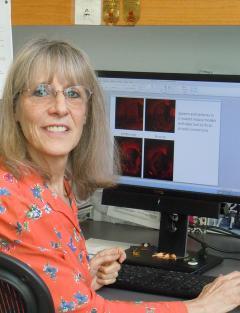
Michele Jacob
Research/Areas of Interest
Beta-catenin Malfunction, Intellectual Disability and Autism
Our studies focus on beta-catenin- an essential protein for typical nervous system development, maturation and function. It plays key roles in cadherin-based synaptic adhesion complexes and as a transcription co-factor in the Wnt signal transduction pathway. Beta-catenin is encoded by CTNNB1, a high significance risk gene for intellectual disability and autism. To elucidate pathophysiological changes caused by aberrant beta-catenin levels and functions, we have generated beta-catenin conditional knockout and overexpressor mouse lines with down- or up-regulation of this pathway in forebrain excitatory neurons. Our findings provide essential insights into novel molecular and functional changes that can lead to seizures, autism relevant behaviors and learning impairments of varying severities.
CTNNB1 Syndrome- a cognitive and motor disorder
We are currently investigating the neurodevelopmental disorder of CTNNB1 syndrome, characterized by developmental delays (language, motor), intellectual disability, spasticity and autism. It is caused by sporadic loss-of-function pathogenic variants in one allele of CTNNB1. The core molecular pathology is insufficient levels of beta-catenin. We use preclinical Ctnnb1 germline heterozygote mice and human central nervous system (CNS) models derived from CTNNB1 syndrome patient pluripotent stem cells (iPSCs) harboring distinct mutations that span the gene. We are defining underlying molecular and functional pathophysiological changes. Most important, we have identified a potential efficacious therapeutic by showing a small molecule treatment normalizes the aberrant beta-catenin protein levels and associated changes.
In addition to CTNNB1 syndrome, insufficient beta-catenin levels and functions are downstream changes caused by other human gene mutations that link to intellectual disability, autism, Alzheimer's disease and myotonic dystrophy. This broad disease relevance highlights the importance of defining function changes in human CNS models with insufficient beta-catenin and identifying an efficacious, safe therapeutic treatment.
Dr. Jacob is a lead researcher of the CTNNB1 Connect and Cure non-profit patient advocacy group, an Oxford-Harrington Rare Disease Scholar and Director of the Tufts Biomedical Therapeutics PhD program.
Education
- Doctor of Philosophy, Yale University, USA, 1978
- Bachelor of Science, City University of New York, USA, 1972