Wellness Student Spotlight: Nicholas Camarada, MD/PhD26
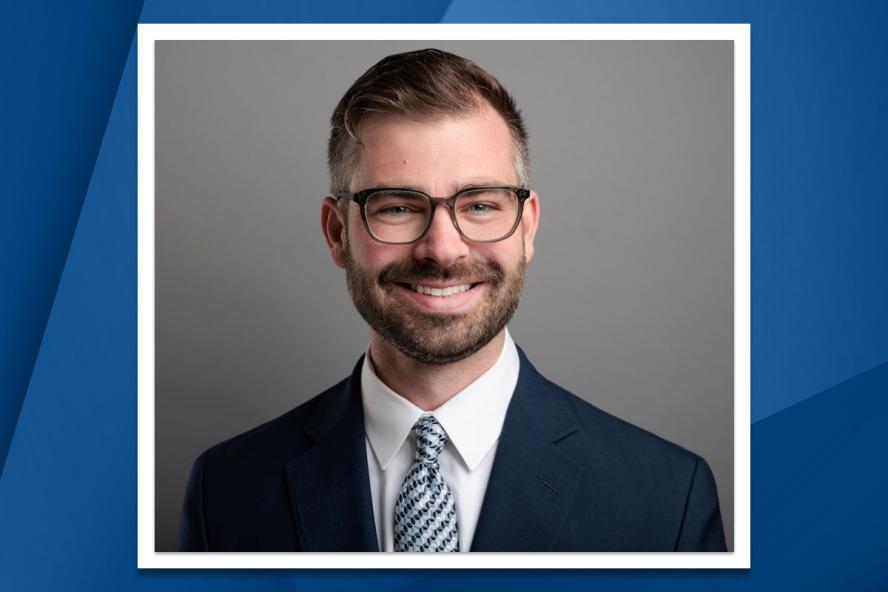
I came to Tufts after completing my Bachelor of Science degree at Duke and working in computational biology and cancer genomics at Dana-Farber Cancer Institute for two years. My PhD work focused on understanding and mitigating severe hypertension, blood vessel dysfunction, and kidney injury caused by VEGF receptor inhibitors, a class of cancer therapies.
I am very grateful and excited to be staying at Tufts for ophthalmology residency, where I hope to continue developing as a physician-scientist interested in retina, ocular imaging, and computational tools to improve patient risk stratification. In my free time, I enjoy music, hiking, reading, video games, travel, and spending time with my wife, family, friends, and two cats.
Who is someone who has had an impact on you during your professional degree program?
My PhD mentor, Dr. Iris Jaffe, had a profound impact on me during my MD/PhD training. What made her mentorship so meaningful was that she seemed to recognize what I was capable of before I could see it myself. She held me to a high standard not because she expected perfection, but because she believed I could rise to it. At times that was difficult, but it motivated me to keep going until I eventually surprised myself. That combination helped me build the foundation for the well-rounded researcher I had always hoped to become. Dr. Jaffe has been a core mentor throughout my training, and I know she will remain someone I rely on for guidance throughout my career. Her mentorship deeply shaped not only the scientist I have become – and will continue to grow into – but also the kind of mentor I hope to be.
What is one activity you have done that contributed to your physical, mental, or emotional wellbeing over the course of your time at Tufts?
Music has been one of the most important constants for my wellbeing throughout my time at Tufts. I grew up playing piano and viola, and during medical and graduate school, I took voice and guitar lessons. Music gave me a way to stay connected to something creative and restorative that was separate from medicine and research. More broadly, I also learned how important it was to protect time with my wife and friends. There were times during my training that I felt every hour should be spent studying, doing experiments, writing, or working clinically. I am still learning how to balance this, but I now recognize that this kind of deliberate time away from training is part of becoming a healthier and more grounded doctor.
What is something you have done in your professional degree program that you are proud of?
I am proud of completing my PhD and growing into the kind of scientist I had dreamed of becoming since high school. It is particularly meaningful to me that I can now carry a scientific question across multiple levels – from computational analysis, to cells, to animal models, to clinical studies – and understand how each approach can strengthen the others. That training fundamentally changed the way I think. It gave me a much deeper respect for the work required to move from an idea to evidence, and for the uncertainty encountered along the way. I am also proud that I have been able to readily bring that mindset into ophthalmology research, where my scientific and clinical interests are finally starting to converge.
What is a challenging situation that you did not think you would overcome, but you did?
A challenging situation I was not sure I would overcome was the early part of my PhD. I entered graduate school with a computational background and essentially no wet lab experience – I had to learn even the most basic techniques from the beginning, like pipetting – and at first the learning curve felt overwhelming. This was made even more difficult by the fact that the COVID-19 pandemic had begun just months before I started in the lab. Experiments failed, protocols took months to troubleshoot, and I often felt inadequate. The research world felt unbounded, and at first I struggled without the clear guardrails I was used to having in medical school and college. A key point that helped me move through this was learning to treat failure as information rather than as a referendum on my capabilities. With steady mentorship from Dr. Iris Jaffe and my close colleagues in lab, repetition, and time, I slowly became more confident. By the end of my PhD, I was able to design and execute multiple experiments in parallel, analyze and interpret complex data, and ultimately trust myself as a scientist. The process was extremely difficult, but it fundamentally changed the way I approach challenges.
What is the biggest challenge you have faced in pursuing this career?
The biggest challenge I have faced in pursuing this career has been learning how to move through college, graduate school, and medical training while managing type 1 diabetes. I was diagnosed at 17, and since then I have learned how much invisible work can go into living with a chronic medical condition. Medical and graduate training already involve long hours, irregular schedules, and significant mental energy; managing diabetes alongside that required me to balance ambition with attention to my own health. At times, that was frustrating because I wanted to move through training without constantly accounting for my body.
Still, diabetes has shaped the kind of physician I hope to become. It has given me a more personal understanding of what it means for patients to carry a medical condition into every part of their lives, especially when that condition is not visible to others. I also hope that, in some small way, my path can encourage others with type 1 diabetes who are pursuing demanding careers. While I once thought resilience meant pushing through anything, I now understand it differently. Resilience is not just about endurance; rather, it is about caring for myself well enough to reliably show up for others.
What is something you wish you knew at the start of your journey? What is a piece of advice you would give your past self?
I would tell my past self to leave more room for change. The person who starts an MD/PhD program is not the same person who finishes one, and that is not a failure of planning; it is part of the process. My interests, priorities, and understanding of what kind of life I wanted all evolved during training. I did not expect ophthalmology to become my path, but it ultimately brought together parts of myself that had developed separately: my interest in computational science, my appreciation for precise microscopic work, my fascination with imaging-based diagnosis, and my desire to make complex data more useful for patients while caring for them directly. Near the end of my PhD, having time to step back and honestly reassess what I wanted was essential to finding this path. I would tell myself not to force certainty about the future too early, but to pay attention to the work that feels energizing, the mentors who see you clearly, and the experiences that continue to pull you forward. Growth sometimes feels like uncertainty before it feels like clarity.
What will you miss most about being at Tufts and/or living in Boston?
I am fortunate that I will be staying at Tufts for ophthalmology residency, so this feels less like leaving and more like entering a new chapter! I had really hoped to stay in Boston, so this is a dream come true. Probably what I will miss most is the familiarity of this stage of training – the routines and people that carried me through this long and formative period of my life. It is surreal to be at the end of it, and I think I will only appreciate this chapter more as I continue to progress in my career.
What is one thing you are looking forward to most in your life post-grad?
After many years moving between different phases of MD/PhD training, I am most looking forward to beginning ophthalmology residency and finally applying the skills I have spent so long building. So much of my training has been about learning how to learn: how to study, how to ask better questions, how to think through uncertainty, and how to keep improving. That learning will continue of course, but I am excited for the next stage to be more focused – to care for patients in the field I chose, to keep growing clinically and scientifically, and to start becoming the ophthalmologist I have worked so hard to become.