Samuel W. Ho, MD, M76
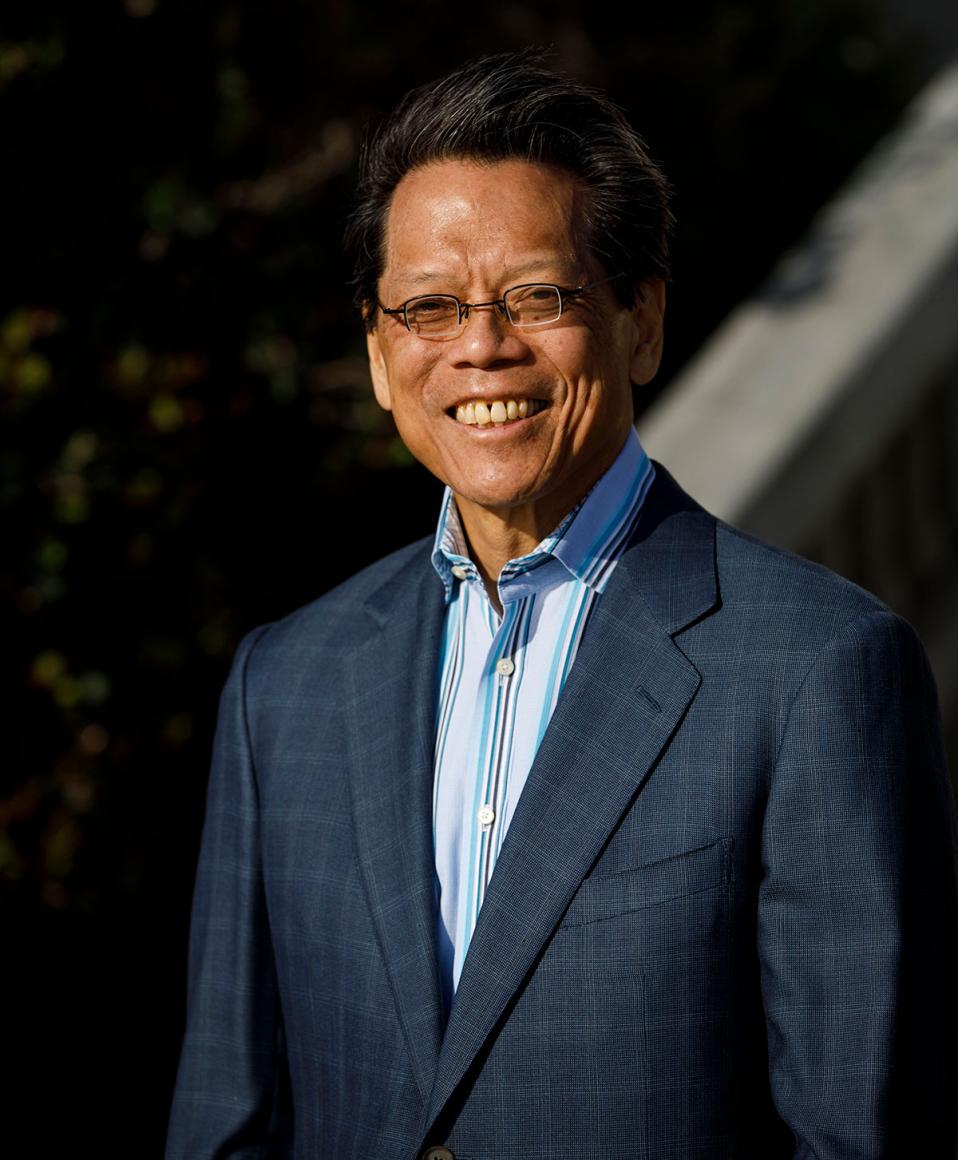
The Sam W. Ho Health Justice Scholars Program was endowed by alumnus Sam W. Ho, M.D., M76, a physician and health care leader who dedicated his career to advancing access to high-quality health care for all. The program reflects his vision of training physicians committed to serving medically underserved communities through direct patient care, leadership in building a more just health care system, or both.
Click here to read Sam Ho's feature on JAMA's Profiles in Primary Care Click here to watch Sam Ho's speech in the 2025 Sam W. Ho Health Justice Symposium
The Sam W. Ho Health Justice Scholars Program was endowed by alumnus Sam W. Ho, M.D., M76, a physician and health care leader who dedicated his career to advancing access to high-quality health care for all. The program reflects his vision of training physicians committed to serving medically underserved communities through direct patient care, leadership in building a more just health care system, or both.
Dr. Sam W. Ho was a primary care physician, health justice advocate, and health care executive whose five-decade career spanned neighborhood clinics, city public health leadership, and national health policy. The Sam W. Ho Health Justice Scholars Program bears his name in recognition of his lifelong commitment to advancing equitable, high-quality care for medically underserved communities—and his extraordinary generosity in ensuring that future generations of physicians carry that work forward.
Dr. Ho's sense of purpose was shaped early. He grew up in Honolulu, where his father cared for underserved patients as a physician in the city's Chinatown neighborhood. As an undergraduate at Northwestern University, where he earned a degree in sociology with Phi Beta Kappa honors in 1972, he helped establish free health clinics in Chicago's Chinatown. He then enrolled at Tufts University School of Medicine, studying in the heart of Boston's Chinatown, where he deepened his commitment to community medicine by helping run free health clinics.
After completing his residency in family medicine at the University of California, San Francisco, Dr. Ho founded San Francisco Family Health Programs in 1981, a multidisciplinary clinic providing primary care in one of the city's most medically underserved neighborhoods. He went on to serve the San Francisco Department of Public Health as medical director, deputy director of health, and county health officer from 1988 to 1991, helping lead the department during the height of the AIDS and crack cocaine epidemics. He also held faculty appointments at UCSF's Schools of Medicine and Nursing.
Dr. Ho's work then widened to national scale. Following a role as senior vice president of health services at Health Net, he served as executive vice president and chief medical officer of PacifiCare Health Systems, a position he continued to hold at UnitedHealthcare after it acquired PacifiCare in 2005. There he was responsible for the clinical, cost, and experience outcomes of 50 million people across commercial, Medicare, Medicaid, and military health plans. A pioneer of health care accountability, he created the nation's first public report card of physician performance in clinical quality and cost-efficiency in 1998, the nation's first value-based payment program in 2001, and the nation's first value-based benefit plan design in 2002. His leadership was recognized with honors including the Paul Ellwood Award for Excellence in Health Care Accountability, and he served on several National Academy of Medicine committees dedicated to improving American health care, including work framing the Essential Health Benefits under the Affordable Care Act.
Throughout his career, Dr. Ho remained deeply engaged with Tufts, serving on the School of Medicine's Board of Advisors and, beginning in 2019, as a University Trustee. In 2016, he established the Samuel W. Ho, M.D., M76 Scholarship Fund to support students pursuing primary care in medically underserved communities. He later endowed the program now known as the Sam W. Ho Health Justice Scholars Program, which brings together cohorts of medical students committed to serving those same communities through coursework on cultural competency, health disparities, and patient empowerment, along with clinical experiences and a longitudinal community-based project.
Dr. Ho's final philanthropic commitment established the Sam W. Ho Center for Health Care Transformation at the Tufts University School of Medicine, a cross-disciplinary effort to improve outcomes, expand access, and increase value in American health care, particularly for those who have been historically underserved.
For many years, Dr. Ho carried a handwritten note that read: "To devote my life to making the most positive impact I can to improve American health care." His life and legacy reflect his conviction that compassionate, high-quality care begins with individual relationships—and that lasting impact requires systems built on equity, quality, and accountability.