Is Becoming a Physician Assistant Right for Me? What to Look for in a PA Program
The job outlook for physician assistants remains strong and is projected to grow 20% from 2024 to 2034, much faster than the average for all occupations, according to the U.S. Bureau of Labor Statistics (BLS). This growth is driven in part by an aging population and an increased emphasis on team‑based, effective care across healthcare systems. The BLS also reports that approximately 12,000 job openings for physician assistants are projected each year, on average, over the decade, reflecting both employment growth and the need to replace retiring workers.
While this positive outlook makes the PA profession appealing to prospective students, the path to applying to PA schools can feel overwhelming. With more than 300 accredited PA programs in the United States, applicants must navigate highly competitive admissions processes and evaluate programs that often look similar on paper. Although admissions statistics—such as acceptance rates, average GPA, and test scores—can be useful data points, they do not tell the full story. Prospective students may benefit from also considering how a PA program prepares graduates for real‑world clinical practice and prepare them to become confident clinicians.
Drawing on insights from the Tufts University Physician Assistant Admissions Chair Mike Otte, PA-C, and Program Manager Rachael Littlehale, MPH, here are six key factors to consider when evaluating PA programs.
- Admissions and timeline
- Program length and structure and class size
- Mission and values
- Curriculum and clinical rotations
- Faculty and teaching methods
- Student support
Understand PA program admissions requirements
Every physician assistant (PA) program has its own admissions timeline, start term, and set of requirements, so understanding the details early can help you apply with confidence. Coursework prerequisites, patient care hour requirements, and application deadlines may vary slightly from program to program, conducting early research an essential first step.
“Review each program’s website to be sure that you have completed the required coursework, patient care hours, and any other requirements,” advises Otte.
The Tufts PA Program participates in the Centralized Application Service for Physician Assistants (CASPA), which allows applicants to submit one centralized application to multiple PA programs. Because CASPA verification can take up to one month, applicants are strongly encouraged to apply early to avoid delays.
A verified Tufts PA application means CASPA has received and processed the following required materials:
- A completed CASPA application with the application fee submitted
- An uploaded résumé or curriculum vitae (CV)
- A completed Patient Care Experience document in CASPA
- All official transcripts received and verified by CASPA with completed prerequisite courses
- At least two letters of recommendation submitted through CASPA
Additional Tufts requirements, while not needed for CASPA verification, must be received by August 1 and include a third letter of recommendation, two short essays, and any optional standardized test scores and TOEFL results (if applicable to the applicant).
Applications that are complete, verified, and meet minimum GPA and patient care experience requirements are reviewed by the admissions committee and considered for interview. Once accepted, students begin the Tufts PA Program in the spring term, with classes starting in January.
|
Consider program length, structure, and class size
Program length and start date can significantly shape both your learning experience and your personal timeline. The average PA program is about 27 months, though some are shorter or longer. The differences can matter depending on your learning style, financial considerations, and life circumstances.
“Our program here at Tufts is 25 months with our last month including a customized board review to prepare our graduating students for the Physician Assistant National Certifying Exam (PANCE), which is a unique feature to our program,” says Otte.
Class size is another important factor that applicants may overlook. With a cohort of 50 students, the Tufts PA Program fosters close faculty student relationships throughout the didactic and clinical phases of training. Each student is paired with a faculty advisor and a peer mentor from the class above, creating a supportive, collaborative learning environment and a strong sense of community.
Factor in mission and values
In addition to reviewing admissions requirements, take time to evaluate a PA program’s mission and values. Reviewing the website and attending information sessions can offer valuable insight into the learning environment, student experience, and program culture. The right PA program should align with your personal and professional goals and leave you both excited about its mission and confident you’ll be supported throughout PA school.
“The ‘best’ program isn’t the same for everyone, and while admissions requirements are important, they aren’t the only reason to choose a program to apply to,” says Otte. “The right choice is the one where you feel aligned with the mission, supported as a learner, and confident that you’ll thrive both academically and personally.”
|
Review curriculum and clinical rotation opportunities
Prospective students should look for a PA curriculum that moves beyond theory and intentionally prepares graduates for realworld clinical practice. A strong program combines rigorous didactic training with hands-on clinical experiences that build confidence, clinical reasoning, and adaptability across care settings.
The Tufts PA Program is distinctive in that the final semester of the didactic year includes three courses focused on evidence‑based medicine, clinical reasoning, and interprofessional collaboration. Together, these courses equip students to critically evaluate medical literature and apply it to real patient cases.
“These courses also strengthen critical differential diagnosis skills, allowing students to provide effective patient-centered care independently but also in collaborative interprofessional teams,” share Littlehale.
Clinical training at Tufts includes eight core rotations, including Orthopedics, followed by opportunities for specialized inpatient and outpatient rotations and an elective in an area of interest. Throughout each rotation, the program evaluates not only student performance but also feedback on clinical sites and preceptors, which allows for continuous, real‑time improvements to the student experience.
Additionally, humanism, cultural humility, and equitable patient‑centered care are woven throughout Tufts’ clinical training. Partnerships with diverse care settings (from neighborhood health clinics to urban teaching hospitals) ensure students gain hands‑on experience caring for patients across a broad range of backgrounds, ages, and acuity levels.
Evaluate faculty expertise and teaching methods
At the heart of any exceptional PA program are the faculty who teach, mentor, and support students throughout their training. Effective PA education emphasizes applied learning, with teaching methods such as real‑world patient cases embedded throughout didactic coursework.
“Patient vignettes are central tools for in‑classroom learning, as well as simulation experiences and summative testing,” says Littlehale.
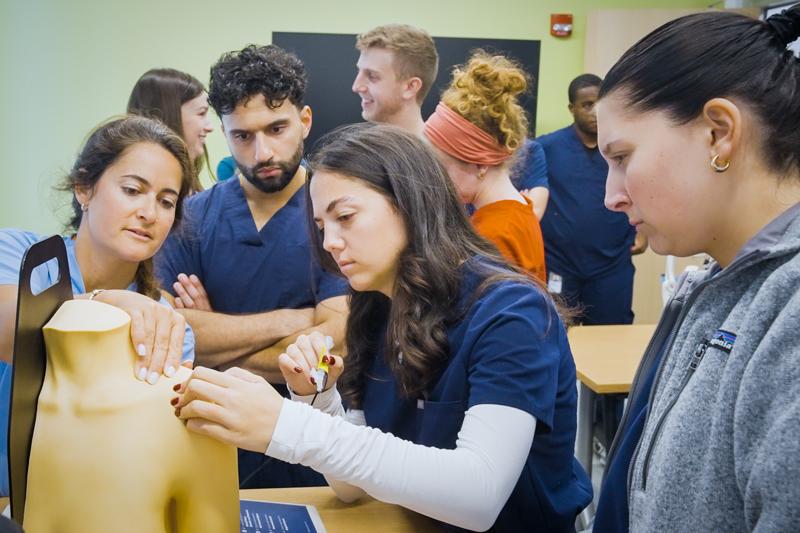
The Tufts PA Program’s core faculty and guest lecturers bring extensive experience across a wide range of inpatient and outpatient specialties, enriching both classroom instruction and clinical preparation. Tufts students apply this learning in the Thompson Simulation Center, a 15,000‑square‑foot facility that integrates advanced technology and innovative medical education practices. During the didactic year, students are in the lab space nearly every week practicing history taking, physical exam techniques, and procedural skills, helping them build confidence, clinical competence, and readiness for real‑world patient care.
Understand student support throughout PA school
PA school is academically rigorous. It’s important to understand the support systems in place before you apply.
The Tufts PA Program supports students from the moment of admission, starting with orientation and a structured Mentor Program that pairs incoming students with peers from the class above.
Throughout the program, students meet with faculty advisors as needed, supported by an open‑door culture that encourages ongoing guidance and collaboration. During the clinical year, students return to campus for Callback Days at the end of each rotation to participate in additional coursework, simulations, and advising, which often include discussions about Capstone projects and career goals.
The program also hosts tailored Board Review sessions in the final month of the curriculum, designed to meet the specific needs of each cohort and contributing to PANCE pass rates well above the national average.
“At Tufts, we want to see all students succeed. Faculty actively nurture supportive relationships with students through engaged teaching, office hours, and referral to support services,” says Littlehale. “Faculty lead by doing, and students can expect a professional, approachable, and compassionate relationship with faculty.”
Take the next step toward becoming a PA
Choosing to pursue a career as a physician assistant is a meaningful decision, and selecting the right program is just as important. Looking beyond surface‑level metrics can help you find a program that will challenge you, support you, and prepare you to make a lasting impact on patient care.
For prospective students wondering how to stand out in a competitive admissions pool, Otte offers guidance on the qualities that matter most to the Tufts PA programs:
“Beyond academic performance, strong applicants stand out through meaningful, hands-on patient care experience, exposure to diverse populations or clinical settings, and a demonstrated commitment to service. Just as important is a growth mindset. PA programs are academically rigorous, and successful students are those who can reflect on challenges, adapt, and continue improving throughout their career. Highlighting how you’ve grown from your experiences can leave a lasting impression.”
To learn more about the Tufts PA program, explore our website: